
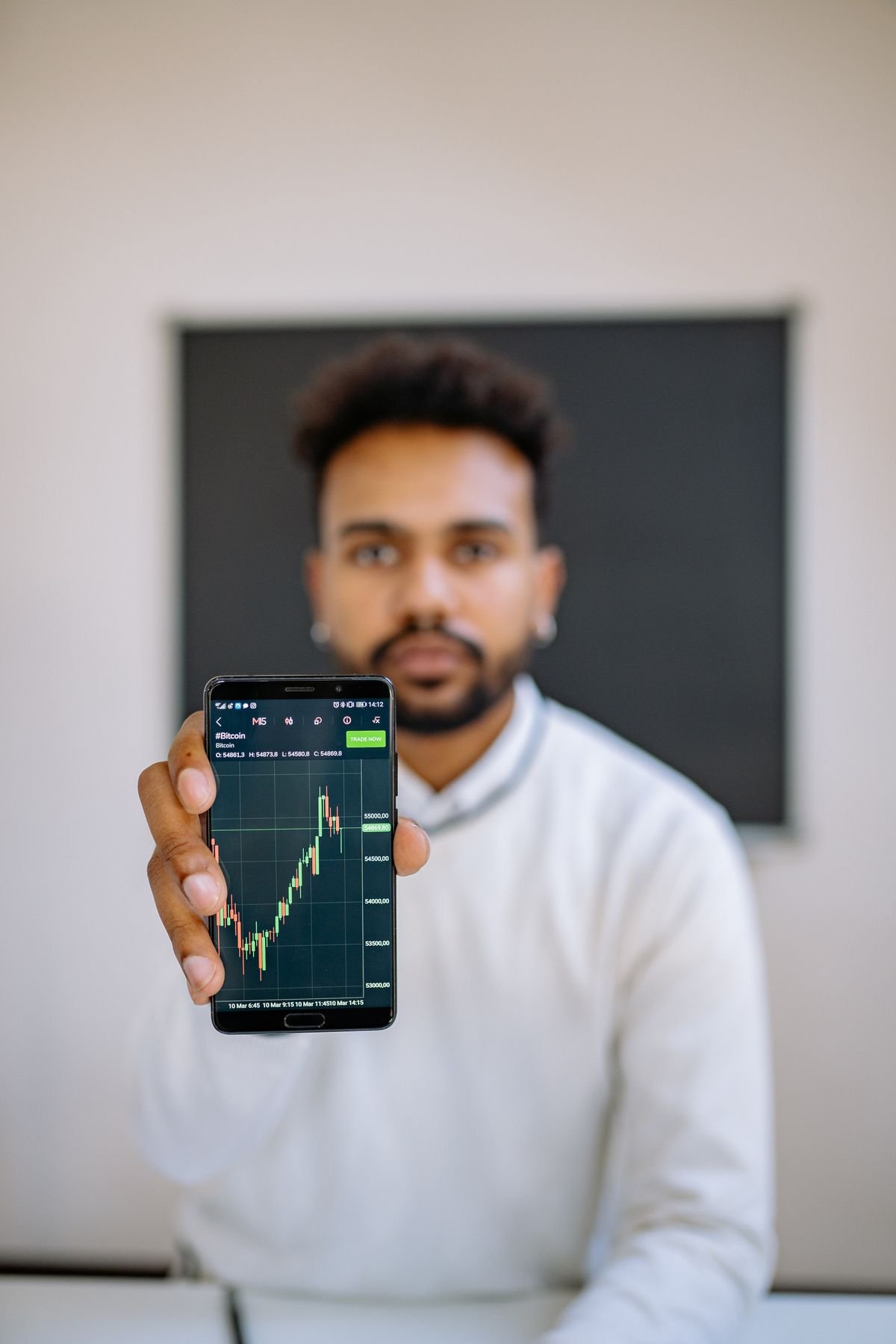
Attention-driven trading tutorial explained in plain language: attention-driven trading is what happens when investors buy a stock because it grabbed their attention, not because they analyzed its value. A viral post, a breaking news headline, a trending ticker on a social app, or a famous investor’s comment can send millions of people toward the same stock on the same day. This tutorial explains how attention moves markets, why it usually hurts the traders who chase it, and how to use attention as a signal without becoming its victim.
Attention is the scarcest resource in modern markets. Thousands of stocks trade every day, but no investor can watch them all. So people buy what they notice. That simple fact creates one of the most reliable patterns in finance: stocks that attract sudden attention tend to spike, then give the gains back. Understanding that pattern is the difference between trading the news and being traded by it.
What Is Attention-Driven Trading?
Attention-driven trading happens when a stock’s trading volume surges because people are paying attention to it. The triggers are familiar. A company reports earnings that beat expectations. A CEO tweets something provocative. A stock appears on a popular Reddit forum, a YouTube channel, or a trading app’s most-active list. News outlets run the story, which draws more attention, which draws more buyers, in a loop that can push a stock far above any reasonable value in days, or even hours.
Researchers have studied this for two decades. The landmark work by Brad Barber and Terrance Odean, and later by Brad Barber, Xing Huang, and Terrance Odean on Robinhood users, found a striking asymmetry: attention strongly affects buying, but barely affects selling. The reason is simple. An investor can buy any of thousands of stocks, so attention decides which ones they consider. But they can only sell stocks they already own, so attention does not change what they sell nearly as much. The result is a flood of new buyers for attention-grabbing stocks, with no matching flood of sellers, and prices jump.
That jump is usually temporary. Barber and Odean’s research, published in the Journal of Finance, found that heavy attention-driven buying is followed by negative abnormal returns: the stocks that everyone rushes to buy tend to underperform afterward. The attention fades, the buyers stop coming, and the price drifts back toward where fundamentals suggest it belongs. This is the central lesson of attention-driven trading: attention creates the move, and the absence of attention undoes it.
The Attention Economy: Why Stocks Go Viral
The attention economy treats human attention as a scarce commodity that platforms compete to capture. Social media feeds, push notifications, and trading apps are designed to surface whatever is most engaging, and in markets, what is engaging is usually what is moving. A stock that rose 20 percent yesterday is more likely to appear on your screen today, which makes it more likely to rise again, which makes it more likely to appear again. This is a feedback loop, and it is the engine of attention-driven trading.
Several forces make the loop stronger now than ever. Commission-free trading apps removed the cost of acting on a whim. Fractional shares removed the price barrier. Social platforms made it possible for a single post to reach millions of would-be traders in minutes. And the apps themselves rank stocks by volume, mentions, and trending status, effectively telling users what to pay attention to. The 2021 GameStop episode is the famous example: a heavily shorted stock became a symbol on social media, attention exploded, the price rose from under $20 to over $300 in weeks, and then fell back just as fast.
None of this means attention is fake or irrelevant. Attention is real demand. When millions of people buy a stock, the price really does go up, at least for a while. The mistake is treating attention as information about value. Attention tells you what other people are doing. It tells you nothing about whether the company is worth the price.
How to Spot Attention: The Signals Traders Watch
Attention is not a feeling. It can be measured, and professional traders track it with concrete signals. Google Trends shows how often people search for a stock ticker or company name; a sudden spike usually means retail attention is arriving. Social media mentions, forum post counts, and trending lists on trading apps measure the same thing in a different place. News volume, meaning how many outlets cover a stock in a day, is another classic proxy. Unusual trading volume, especially volume far above the stock’s average, is the market’s own record of attention: people are trading it because they are talking about it.
Each signal has strengths and weaknesses. Google Trends is free and easy to read, but it lags slightly and cannot tell you whether searches are by buyers or sellers. Social media mentions are fast, but they are noisy and easy to manipulate. News volume is reliable, but by the time a story reaches the front page, much of the move has already happened. Volume is the most honest signal, because it measures money, not talk, but it tells you that attention is here, not where the price goes next. Smart traders combine two or three signals and look for agreement.

A Step-by-Step Framework for Trading Attention
Here is a practical framework for using attention as a trading signal. It is built to keep you from chasing, and it works whether you trade stocks, crypto, or anything else that goes viral.
Step 1: Detect the attention early. Set up alerts for your watchlist using Google Trends, news scanners, and social listening tools. You want to know when attention is building, not after it has peaked. A ticker that jumps from zero mentions to hundreds in an hour is a signal. A ticker that has already been trending for three days is a warning.
Step 2: Ask what the attention is about. Attention has a cause, and the cause matters. Attention from strong earnings or a real product launch is different from attention from a meme or a rumor. Read the source. If you cannot find a real reason for the attention, treat the move as fragile.
Step 3: Check the fundamentals before you touch the buy button. What is the company actually worth? Look at revenue, earnings, debt, and the price-to-earnings ratio. If the stock has risen 100 percent while nothing about the business changed, the move is attention, not value, and attention fades.
Step 4: Decide your plan before you enter. Attention trades move fast, so decide your entry, your exit, and your maximum loss in advance. A common discipline is risking no more than 1 percent of your account on a single attention trade, and using a stop-loss order so a reversal cannot wipe you out. If you cannot state your exit plan in one sentence, do not enter.
Step 5: Watch for the attention to peak. The end of an attention trade looks like this: volume stays high but the price stops rising, the story spreads to mainstream outlets that are always late, and late buyers arrive asking whether it is too late to buy. That is often the top. Plan your exit while others are still arriving.
| Check | Healthy attention trade | Warning sign |
|---|---|---|
| Reason | Real news, earnings, product launch | Meme, rumor, no clear cause |
| Volume | Rising steadily with price | Extreme spike, then flat price |
| Valuation | Price still near fundamentals | Price far above any value estimate |
| Mood | Calm, plan-based buying | Euphoria, fear of missing out |
| Exit plan | Written down before entry | None, or decided after buying |
The Risks: Why Chasing Attention Usually Loses Money
The research is blunt. Attention-driven buying is followed by poor returns on average. There are four reasons. First, you arrive late. By the time a stock is trending, the early buyers have already pushed the price up, so you buy near the peak. Second, you pay for volatility. Attention spikes coincide with wild price swings, so your position can drop 20 percent in a day. Third, you crowd with everyone else. When millions of people hold the same crowded trade, any bad news triggers a rush for the exit at the same time, and there are not enough buyers left. Fourth, attention is a zero-sum game against professionals. Market makers and institutions understand these patterns and often take the other side, selling into the attention-driven buying.
The GameStop saga is the cautionary tale. People who bought early, when attention was just building, made life-changing money. People who bought at the peak, when it was on every news channel, lost most of it within days. The difference was not intelligence. It was timing, and timing an attention peak is nearly impossible to get right consistently. The practical lesson is to treat attention trades as short-term speculation with money you can afford to lose, not as investing.
Using Attention as a Contrarian Signal
Experienced traders often use attention the opposite way: as a contrarian indicator. When a stock’s attention is at an extreme, with euphoric headlines, record search volume, and everyone talking about it, that can be a signal that the top is near, not that it is time to buy. Conversely, when a good company is ignored, with low search interest and no headlines, that can be a signal that it is undervalued. This is not a rule to trade blindly, but it is a useful lens: extreme attention usually means extreme expectations, and extreme expectations are hard to meet.
Institutions do this systematically. Some funds build attention indices from search data, news counts, and social media mentions, and use them to avoid crowded stocks or to time entries after attention fades. Retail traders can do a simpler version. When you feel excited about a stock everyone is talking about, pause and ask one question: am I buying because the business improved, or because everyone else is buying? If the honest answer is the second one, step back.
Frequently Asked Questions
What is attention-driven trading?
Attention-driven trading is buying stocks because they have captured public attention, through news, social media, search trends, or trending lists, rather than because of an analysis of the company’s value. Research shows attention strongly affects buying, and that attention-driven buying is usually followed by poor returns.
Does attention predict stock returns?
Yes, but not in the way most people hope. High attention predicts a short-term price spike followed by below-average returns, because the spike is driven by temporary buying rather than lasting value. Attention is a much better signal for timing exits and avoiding crowded trades than for picking winners.
How do I measure attention in a stock?
Use Google Trends for search interest, news counts for media coverage, social media mentions and forum activity for retail buzz, and trading volume for the market’s own record of attention. Two or three signals pointing the same way are more reliable than any single one.
Can attention-driven trading be profitable?
It can be, but mostly for traders who get in early, before the crowd, and exit with a plan. For traders who chase a stock after it is already trending, the odds are poor: research finds attention-driven buying is followed by negative abnormal returns on average. Treat it as speculation, size positions small, and use stop-losses.
Conclusion
Attention-driven trading tutorial explained in one line: people buy what they notice, attention creates short-term price spikes, and those spikes usually reverse once the attention fades. The research is consistent, from Barber and Odean to the Robinhood studies: attention drives buying, not selling, and the crowd that arrives late pays for the crowd that arrived early. That does not make attention useless. Used carefully, as an early-warning signal, a check on crowded trades, and a reminder to plan your exit before you enter, attention is a genuine edge. The edge disappears the moment you start chasing it. Watch the attention, check the fundamentals, plan the trade, and let the crowd do the chasing.
 asad_writer
 DIGITAL EMPIRE AGENCY