
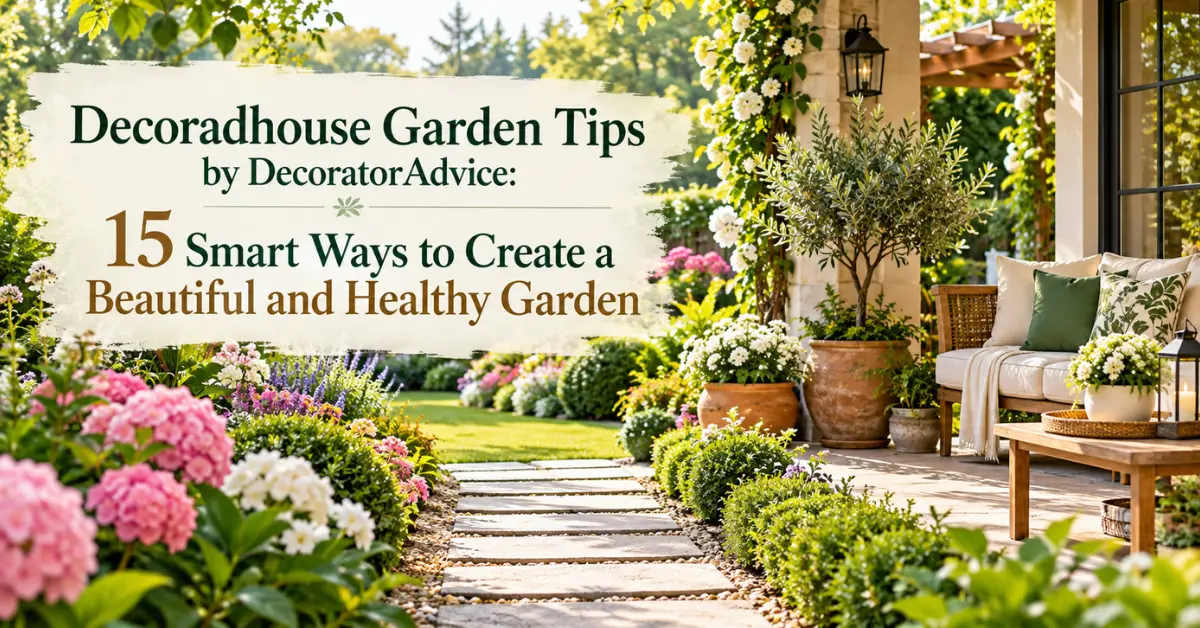
A beautiful garden can completely change the appearance of a home. It creates a welcoming outdoor environment, provides a peaceful place to relax, and makes everyday living more enjoyable. However, creating an attractive garden requires more than buying flowers and placing decorative pots around the yard. It involves thoughtful planning, suitable plants, healthy soil, proper watering, and a balanced design.
The decoradhouse garden tips by decoratoradvice approach focuses on making outdoor spaces both beautiful and practical. Whether you have a spacious backyard, a small front garden, a balcony, or a simple patio, you can improve your outdoor environment with the right gardening techniques.
You do not need professional landscaping experience or an unlimited budget to get started. Small improvements, such as arranging plants properly, adding organic compost, installing attractive lighting, and creating comfortable seating areas, can make a noticeable difference.
In this guide, you will discover practical ways to plan your garden, choose suitable plants, improve soil quality, reduce maintenance, decorate outdoor spaces, and create a healthy environment throughout the year. These ideas are suitable for beginners as well as homeowners who want to refresh an existing garden.
What Are Decoradhouse Garden Tips by DecoratorAdvice?
Decoradhouse garden tips by DecoratorAdvice are practical ideas that combine gardening knowledge with creative outdoor decoration. The purpose is to help homeowners develop gardens that look attractive, support healthy plant growth, and remain manageable over time.
A successful garden should not focus entirely on appearance. It should also consider the needs of plants, available space, local weather, water requirements, and the amount of maintenance a homeowner can realistically provide.
For example, a small balcony may benefit from hanging planters, compact herbs, and foldable furniture. A large backyard might offer enough room for flower beds, vegetable gardens, shaded seating, and decorative pathways.
The most important principles include:
- Understanding the available garden space.
- Selecting plants suitable for local conditions.
- Preparing healthy soil before planting.
- Providing sufficient sunlight and water.
- Using attractive but practical decorations.
- Maintaining a comfortable balance between plants and open space.
- Following a manageable maintenance routine.
When these principles work together, even a simple outdoor area can become a pleasant extension of your home.
1. Plan Your Garden Before Buying Plants
One of the most useful gardening habits is planning before purchasing anything. Many beginners visit a garden center, buy attractive flowers, and then struggle to find suitable places for them.
A little preparation can prevent unnecessary spending and help plants grow successfully.
Start by measuring your available space. Identify existing trees, walls, fences, walkways, water connections, and areas that receive direct sunlight.
Observe your garden at different times of the day. A location that receives morning sunshine may become shaded in the afternoon. Another corner may experience strong afternoon heat that affects delicate plants.
Consider these questions before designing your garden:
- How much space is available?
- Which areas receive direct sunlight?
- Where does rainwater collect?
- Is the soil dry, sandy, or heavy with clay?
- Do you want flowers, vegetables, herbs, or decorative plants?
- How much time can you spend maintaining the garden?
- Do you need an outdoor seating or dining area?
Once you understand these conditions, draw a simple garden layout.
Divide the space into functional areas. You might create one section for flowers, another for herbs, and a separate corner for seating.
A planned garden usually looks more organized because every element has a clear purpose.
2. Choose Plants According to Your Climate
Plant selection is one of the most important parts of successful gardening. A plant that grows beautifully in one region may struggle in another because of differences in temperature, humidity, rainfall, and sunlight.
Instead of selecting plants only because they look attractive, consider their growing requirements.
Plants for Sunny Gardens
Gardens receiving several hours of direct sunlight can support many flowering and productive plants.
Popular choices include:
- Sunflowers
- Marigolds
- Zinnias
- Lavender
- Rosemary
- Tomatoes
- Peppers
Check the individual plant’s sunlight requirements before planting. Some varieties tolerate intense afternoon heat better than others.
Plants for Shady Gardens
Shaded areas can also become attractive gardening spaces.
Consider:
- Ferns
- Hostas
- Begonias
- Heucheras
- Certain hydrangea varieties
- Shade-tolerant ground covers
Remember that shade is not always complete darkness. Some plants prefer filtered sunlight or a few hours of gentle morning sunshine.
Plants for Low-Maintenance Gardens
If you have limited time, choose plants that are naturally suited to your local conditions.
Native plants are often excellent choices because they are adapted to regional weather and soil conditions. Once established, many require less additional watering and attention than unsuitable exotic varieties.
Succulents, ornamental grasses, selected perennial flowers, and hardy herbs can also work well depending on your climate.
The best approach is to select plants according to their actual growing needs rather than relying on a universal list.
3. Improve Soil Quality Before Planting
Healthy soil provides the foundation for a healthy garden. Even attractive plants may struggle when their roots cannot access sufficient nutrients, air, or moisture.
Before planting, inspect the condition of your soil.
Sandy soil drains quickly but may struggle to retain water and nutrients. Clay soil holds moisture but can become compacted and poorly drained. Loamy soil generally offers a useful balance of drainage, moisture retention, and structure.
Simple Ways to Improve Garden Soil
Start by removing weeds, stones, and unwanted debris.
Loosen compacted soil carefully without disturbing large tree roots. Add mature compost or suitable organic matter to improve soil structure.
Compost offers several benefits:
- Supports beneficial soil organisms.
- Improves moisture retention.
- Helps improve soil structure.
- Adds organic nutrients.
- Encourages healthier root development.
If you are growing vegetables or other plants with specific nutrient requirements, consider a soil test before adding fertilizer.
A soil test can help identify pH levels and nutrient deficiencies. This prevents unnecessary fertilizer applications and helps you make more informed decisions.
Avoid adding fertilizer simply because a plant looks unhealthy. Yellow leaves, poor growth, and wilting can also result from drainage problems, pests, insufficient light, or overwatering.
4. Water Your Garden the Right Way
Watering is a basic gardening activity, but incorrect watering can create serious problems.
Some homeowners water their plants every day without checking soil moisture. Others wait until plants begin wilting. Both habits can affect plant health.
The best watering schedule depends on plant type, weather, soil texture, container size, and season.
Water Early in the Morning
Early morning is generally a suitable time to water outdoor plants.
Watering during this period allows moisture to reach the roots before temperatures rise. It can also reduce unnecessary evaporation.
Avoid routinely watering during the hottest part of the afternoon.
Water Deeply Instead of Lightly
Frequent shallow watering may encourage roots to remain close to the soil surface.
For many established garden plants, deeper watering at appropriate intervals encourages roots to explore a larger soil area.
However, do not assume every plant needs the same amount of water.
Check Soil Moisture
A simple way to check moisture is to insert your finger into the soil.
If the upper layer feels dry, investigate whether the plant needs watering. For larger plants, check deeper into the root zone when possible.
Containers often dry faster than garden beds, especially during hot weather.
Consider Drip Irrigation
Drip irrigation delivers water close to plant roots.
It can be particularly useful for vegetable beds, raised gardens, and areas containing multiple plants with similar watering requirements.
A properly designed system reduces water waste and makes routine garden care easier.
5. Use Mulch to Protect Your Garden
Mulching is one of the simplest ways to improve garden maintenance.
Mulch is a protective layer placed over the soil surface. It may consist of wood chips, bark, straw, compost, shredded leaves, or other suitable materials.
A layer of approximately two to three inches is often appropriate for many garden beds, although the correct depth depends on the material and plant type.
Benefits of Mulching
Mulch can:
- Reduce moisture loss.
- Suppress many weeds.
- Protect soil from temperature fluctuations.
- Reduce soil erosion.
- Improve the appearance of flower beds.
- Add organic matter when natural materials decompose.
Keep mulch away from direct contact with plant stems and tree trunks. Piling it against trunks can encourage moisture-related damage and pest problems.
Choose mulch according to your garden’s needs. Organic materials are useful for many flower and vegetable beds, while gravel may suit certain dry-climate or decorative gardens.
6. Create a Balanced Garden Layout
A beautiful garden should feel organized without appearing overly artificial.
One effective design technique is to arrange plants according to their height, shape, and visual importance.
Place taller plants toward the back of a border or against suitable walls and fences. Medium-sized plants can occupy the middle section, while shorter flowers and ground covers can fill the front.
This arrangement creates depth and allows more plants to receive suitable light.
Create Different Garden Zones
You can divide your outdoor area into separate functional zones.
For example:
Flower Zone: Use colorful flowers and attractive containers to create visual interest.
Relaxation Zone: Add a comfortable bench, outdoor chairs, or a small table.
Vegetable Zone: Reserve a sunny section for vegetables and herbs.
Decorative Zone: Use a small fountain, garden sculpture, or attractive planter arrangement.
Walking Zone: Keep pathways open so people can move comfortably through the garden.
The goal is to make the garden easy to use while maintaining a consistent appearance.
Avoid placing too many features in a small area. A few well-selected elements often look better than excessive decoration.
7. Make Small Gardens Look Bigger
Limited outdoor space does not mean you cannot create an attractive garden.
Small gardens can become beautiful through careful arrangement, suitable plant selection, and effective use of vertical space.
Use Vertical Planters
Vertical gardening allows you to grow plants upward rather than occupying all available floor space.
Consider:
- Wall-mounted planters.
- Hanging baskets.
- Trellises.
- Tiered plant stands.
- Vertical herb gardens.
- Climbing plants.
Make sure wall-mounted systems are properly secured and can handle the weight of wet soil and mature plants.
Select Compact Plants
Large plants can overwhelm small outdoor spaces.
Choose compact varieties, dwarf shrubs, smaller ornamental grasses, and herbs that fit the available area.
Container gardening is especially useful because pots can be rearranged as your garden develops.
Keep Walking Areas Clear
A small garden can quickly become crowded when every available corner contains a pot or decoration.
Leave enough open space for movement. Use a limited color palette and repeat similar planter materials to create a coordinated appearance.
These simple changes can make a small patio or balcony feel more spacious.
8. Grow Your Own Herbs and Vegetables
A garden can be both decorative and productive.
Growing herbs and vegetables at home allows you to enjoy fresh produce while making better use of sunny outdoor spaces.
Many beginner-friendly plants grow successfully in raised beds or suitable containers.
Easy Herbs to Grow
Consider starting with:
- Basil
- Mint
- Parsley
- Thyme
- Rosemary
- Oregano
- Chives
Different herbs have different watering and sunlight requirements. For example, rosemary generally prefers well-drained conditions, while mint appreciates more consistent moisture.
It is often better to grow mint in its own container because it can spread aggressively.
Beginner-Friendly Vegetables
Depending on your growing season, consider:
- Lettuce
- Radishes
- Cherry tomatoes
- Cucumbers
- Green beans
- Peppers
- Spinach
Read seed packets carefully and follow recommended planting dates and spacing.
Do not overcrowd vegetable containers. Proper airflow and root space help reduce plant stress and disease problems.
9. Add Outdoor Furniture for Comfort
A garden should not only be visually attractive. It should also provide a comfortable place to spend time.
Outdoor furniture can transform an ordinary yard into a practical living area.
Popular options include:
- Wooden benches.
- Weather-resistant chairs.
- Compact dining tables.
- Outdoor sofas.
- Foldable furniture.
- Hammocks.
- Small side tables.
Choose furniture according to your available space and local weather.
Teak, aluminum, and quality outdoor synthetic materials are popular options because they can perform well in suitable outdoor conditions.
However, every material requires some maintenance.
Use outdoor cushions made from suitable weather-resistant fabrics. Store removable cushions during heavy rain or when they are not being used for extended periods.
For small patios, foldable chairs and compact tables can provide flexibility without permanently occupying valuable space.
10. Improve Your Garden with Outdoor Lighting
Lighting makes a garden more welcoming after sunset.
It also improves visibility around pathways, entrances, seating areas, and steps.
The best approach is to use lighting for specific purposes rather than installing bright lights everywhere.
Popular Garden Lighting Ideas
Solar Pathway Lights: Place them along walkways to improve visibility.
String Lights: Use suitable outdoor-rated string lights above a seating or dining area.
Wall Lights: Install outdoor fixtures near entrances and patios.
Spotlights: Highlight attractive trees, sculptures, or architectural features.
Lanterns: Use suitable outdoor lanterns to create a warm atmosphere.
Choose weather-rated electrical products and follow installation safety instructions. Keep cables away from walking routes and water sources.
Warm lighting often creates a relaxing atmosphere, while focused lighting can make important garden features stand out.
11. Try Affordable DIY Garden Decoration
Creating an attractive garden does not always require expensive landscaping work.
DIY projects offer an affordable way to personalize outdoor spaces.
Here are some ideas worth considering.
Painted Flower Pots
Old terracotta pots can be refreshed with suitable outdoor paint.
Choose two or three complementary colors to maintain a consistent appearance.
Recycled Wooden Planters
Strong, untreated, or appropriately protected wooden containers can be converted into planters.
Make sure the material is safe for gardening and that excess water can drain properly.
Decorative Plant Labels
Create simple labels using weather-resistant materials.
These are particularly useful when growing herbs and vegetables.
Handmade Bird Feeders
Bird feeders can make a garden more interesting and encourage wildlife activity.
Choose appropriate food for local bird species and clean feeders regularly to prevent disease transmission.
Stone Garden Borders
Natural stones can help define flower beds and create a neat separation between planting areas and pathways.
Before starting a DIY project, consider durability, drainage, and safety. Avoid using containers that previously held hazardous chemicals.
12. Choose a Consistent Garden Color Scheme
Color plays an important role in outdoor decoration.
A garden containing too many unrelated colors may appear visually crowded. A coordinated color scheme can make the space feel more balanced.
Natural and Relaxing Colors
For a peaceful atmosphere, consider:
- White flowers.
- Soft pink blooms.
- Lavender.
- Pale blue.
- Different shades of green.
Bright and Colorful Gardens
If you prefer a lively outdoor environment, use combinations of yellow, orange, purple, red, and pink flowers.
Balance bright colors with green foliage to prevent the design from becoming overwhelming.
Modern Garden Style
A contemporary garden often uses:
- Green foliage.
- White flowers.
- Gray paving.
- Black or charcoal planters.
- Natural wood.
- Simple furniture.
Repeat a few colors and materials across the garden. This creates visual consistency without requiring expensive decorations.
13. Maintain Your Garden Throughout the Seasons
Garden maintenance changes throughout the year.
Temperature, rainfall, sunlight, and plant growth all influence what needs to be done.
A seasonal routine helps prevent small problems from becoming major issues.
Spring Garden Care
Spring is an excellent time to prepare garden beds and begin new planting.
Useful activities include:
- Remove winter debris.
- Inspect plants for damage.
- Add mature compost where needed.
- Prepare suitable planting areas.
- Divide appropriate established perennials.
- Plant flowers and vegetables according to local planting dates.
Avoid working excessively wet soil because it can become compacted.
Summer Garden Care
Summer often brings increased water demand and faster plant growth.
Focus on:
- Checking soil moisture regularly.
- Watering appropriately.
- Applying mulch.
- Removing weeds.
- Harvesting vegetables.
- Providing shade for sensitive plants when necessary.
- Checking for pests and disease.
Container plants may need more frequent attention because their growing medium can dry quickly.
Autumn Garden Care
Autumn is a useful period for preparing the garden for cooler weather.
Consider:
- Removing diseased plant material.
- Collecting suitable leaves for compost.
- Planting appropriate seasonal bulbs.
- Adding compost to selected beds.
- Cleaning and storing garden tools.
- Protecting sensitive plants where necessary.
Healthy leaves can often be composted or shredded and used as organic mulch.
Winter Garden Care
Winter maintenance depends heavily on your climate.
In colder regions, protect vulnerable plants from frost using suitable covers and move containers to sheltered areas when appropriate.
In warmer regions, winter may provide an opportunity to plant cool-season vegetables and maintain flowering plants.
Avoid unnecessary pruning. Some plants should only be pruned during specific periods, depending on their flowering and growth habits.
14. Use Sustainable Gardening Methods
Sustainable gardening focuses on using natural resources carefully while supporting a healthy outdoor environment.
You do not need to change your entire garden at once. Small adjustments can make your gardening routine more responsible.
Collect Rainwater
Where local regulations and conditions allow, rainwater collection can reduce dependence on treated water for irrigation.
Use covered storage containers and keep them maintained to prevent mosquito breeding.
Compost Organic Waste
Composting converts suitable organic material into a useful soil amendment.
You can compost many fruit and vegetable scraps, dry leaves, grass clippings, and other appropriate garden materials.
Avoid adding meat, dairy, diseased plants, or other unsuitable materials to a basic home compost system.
Choose Native Plants
Native plants can provide valuable food and habitat for local wildlife.
They are often well adapted to regional conditions and may require less additional maintenance once established.
Encourage Beneficial Insects
Bees, butterflies, ladybugs, and other beneficial insects play important roles in garden ecosystems.
Grow suitable flowering plants, provide appropriate habitat, and avoid unnecessary pesticide applications.
When pest treatment is required, identify the problem first and use the least harmful effective method according to product instructions.
15. Avoid Common Garden Design and Maintenance Mistakes
Even a carefully decorated garden can struggle when basic gardening requirements are ignored.
Understanding common mistakes can save time, money, and effort.
Overcrowding Plants
Planting too closely may restrict airflow and increase competition for water, nutrients, and sunlight.
Follow the recommended spacing for mature plants rather than judging by their size at purchase.
Ignoring Drainage
Poor drainage can cause roots to remain waterlogged.
If water collects after rainfall, investigate the drainage problem before adding more plants.
Using Too Much Fertilizer
Excess fertilizer can damage roots, create excessive leafy growth, and contribute to environmental pollution.
Use soil testing and plant-specific recommendations instead of applying fertilizer unnecessarily.
Choosing Plants Without Checking Their Requirements
A beautiful plant may not be suitable for your garden.
Check its mature size, sunlight requirements, temperature tolerance, soil preferences, and water needs before purchasing it.
Adding Too Many Decorations
Garden ornaments should complement the natural environment.
Too many sculptures, lights, pots, and decorative accessories can make a small garden feel cluttered.
Select a few attractive features and allow plants to remain the main focus.
Ignoring Regular Maintenance
Weeds, dead leaves, damaged branches, and blocked pathways can quickly affect the appearance of a garden.
A simple weekly maintenance routine is often more effective than waiting until the garden needs a major cleanup.
16. Make Your Garden Safe for Children and Pets
Outdoor spaces should be comfortable and safe for everyone in the household.
Families with children and pets should consider plant selection, storage, pathways, and decorative features.
Some common garden plants can be toxic when eaten. Examples include oleander, sago palm, foxglove, and lily of the valley.
Before purchasing plants, check their safety for the people and animals who use your garden.
Additional safety measures include:
- Keep fertilizers and pesticides in secure storage.
- Avoid sharp decorations near play areas.
- Cover or safely manage garden ponds.
- Keep tools away from children.
- Provide shaded resting areas.
- Store chemicals in their original containers.
- Check outdoor furniture for loose parts or unstable structures.
- Keep pathways clear to reduce tripping hazards.
If pets regularly use the garden, consider their behavior when choosing plants and landscaping materials.
A thoughtfully designed family garden can remain attractive without compromising safety.
17. Create a Practical Weekly Garden Maintenance Routine
Consistency is one of the most effective ways to maintain a healthy garden.
You do not need to spend several hours every day working outdoors. A manageable routine can prevent many common gardening problems.
Weekly Garden Checklist
Plant Inspection
Check leaves, stems, and flowers for unusual changes, pests, and disease symptoms.
Watering
Check soil moisture and water plants according to their needs.
Weed Removal
Remove young weeds before they become established.
Cleaning
Clear fallen leaves from pathways and remove damaged plant material.
Pruning and Deadheading
Remove dead flowers and damaged growth when appropriate for the plant.
Garden Organization
Return tools to storage, clean containers, and keep seating areas tidy.
Monthly Garden Checklist
Once a month, consider:
- Inspecting irrigation equipment.
- Checking mulch depth.
- Reviewing plant growth.
- Cleaning outdoor furniture.
- Checking garden lighting.
- Inspecting containers for drainage problems.
- Reviewing the garden layout.
- Checking for signs of soil erosion.
A consistent routine makes gardening less stressful and helps maintain an attractive outdoor environment.
18. Plan a Beautiful Garden on a Limited Budget
A stylish garden does not have to be expensive.
The most effective improvements are often the ones that solve practical problems first.
Instead of purchasing every decorative feature at once, divide your garden project into stages.
Stage One: Basic Garden Preparation
Focus on cleaning the space, improving soil, fixing drainage issues, and removing unwanted weeds.
Stage Two: Essential Plants
Choose a small selection of suitable plants that match your climate and available sunlight.
Stage Three: Garden Appearance
Add mulch, attractive containers, simple borders, and a coordinated planting arrangement.
Stage Four: Comfort and Decoration
Introduce seating, outdoor lighting, and a few decorative features.
Stage Five: Long-Term Improvements
Consider raised beds, improved irrigation, pergolas, or larger landscaping features when your budget allows.
You can also reduce costs by growing plants from seeds, propagating suitable cuttings, dividing established perennials, and reusing safe containers.
The important thing is to avoid spending money on decorations before solving basic gardening problems.
How to Start Your Own Garden: A Simple Step-by-Step Plan
If you are a complete beginner, following a clear sequence makes the process easier.
Step 1: Select an Area
Choose a manageable outdoor location. It could be a small corner, patio, balcony, or backyard.
Step 2: Observe Sunlight
Check how much direct and indirect sunlight the area receives throughout the day.
Step 3: Inspect the Soil
Understand the soil texture, drainage, and basic nutrient condition.
Step 4: Decide Your Garden Style
Choose between a flower garden, vegetable garden, herb garden, decorative garden, or a combination.
Step 5: Select Suitable Plants
Purchase plants that match your local climate, sunlight, and available space.
Step 6: Prepare the Planting Area
Remove weeds, improve soil, and arrange containers or planting beds.
Step 7: Plant Carefully
Follow recommended planting depths and spacing requirements.
Step 8: Water Appropriately
Provide sufficient moisture without keeping the soil permanently saturated.
Step 9: Add Decorative Features
Introduce suitable pots, furniture, pathways, or lighting.
Step 10: Maintain Your Garden
Inspect plants regularly and adjust watering, pruning, and seasonal care as required.
Starting with a small project gives you the opportunity to learn how plants respond to your environment before expanding your garden.
Frequently Asked Questions About Decoradhouse Garden Tips by DecoratorAdvice
1. What are decoradhouse garden tips by decoratoradvice?
Decoradhouse garden tips by decoratoradvice are practical gardening and outdoor decoration ideas that help homeowners create attractive, healthy, and functional outdoor spaces. They include garden planning, plant selection, soil preparation, watering, landscaping, and seasonal maintenance.
2. How can I make my garden look beautiful?
Start by organizing your garden and selecting plants that suit your available space. Use attractive containers, maintain clean pathways, create balanced flower beds, and add suitable outdoor lighting. A consistent color scheme can also improve the overall appearance.
3. What are the easiest plants for beginners?
Some beginner-friendly choices include marigolds, zinnias, basil, mint, rosemary, sunflowers, and selected succulents. However, the best options depend on your local climate, sunlight, and soil conditions.
4. How often should I water my garden?
There is no single watering schedule for every garden. Watering requirements depend on the plant species, soil, temperature, rainfall, and season. Check soil moisture before watering and adjust your routine accordingly.
5. How can I improve garden soil naturally?
Adding mature compost and suitable organic matter can improve soil structure, moisture retention, and nutrient availability. A soil test can help identify specific nutrient deficiencies and pH problems.
6. How do I maintain a garden with limited time?
Choose climate-appropriate plants, use mulch, group plants with similar watering requirements, and consider drip irrigation. Regular short maintenance sessions can also prevent larger problems.
7. What is the best way to decorate a small garden?
Use vertical planters, hanging baskets, compact furniture, and a limited color scheme. Keep pathways open and avoid filling every available space with decorations.
8. Are raised garden beds useful?
Yes. Raised beds can make planting and harvesting more convenient, improve control over soil conditions, and help manage certain drainage problems. Their effectiveness depends on proper construction, soil selection, and watering.
9. Which garden decorations are affordable?
Painted pots, recycled wooden planters, handmade plant labels, stone borders, simple solar lights, and DIY bird feeders are affordable options.
10. How can I make my garden more eco-friendly?
Use compost, collect rainwater where permitted, choose native plants, reduce unnecessary pesticide use, and provide suitable habitats for beneficial insects and birds.
11. How can I protect my garden during summer?
Use suitable mulch, monitor soil moisture, water appropriately, and provide temporary shade for plants that cannot tolerate intense heat. Container plants may need more frequent moisture checks.
12. How do I protect plants during winter?
Protect frost-sensitive plants with suitable covers or move movable containers to sheltered locations. Follow the specific winter requirements of each plant and avoid unnecessary pruning.
13. Can I create a garden without a backyard?
Absolutely. Balconies, patios, rooftops, and even small entrances can support container gardening. Use suitable planters, hanging baskets, and vertical structures to maximize available space.
14. What is the biggest mistake beginners make?
One common mistake is purchasing plants without checking their growing requirements. Sunlight, drainage, soil conditions, mature size, and watering needs should all be considered before planting.
15. How long does it take to create a beautiful garden?
A basic container or flower garden can be established within a short period, but a mature landscape develops over time. The growth rate depends on plant selection, weather, soil quality, and maintenance.
Conclusion
Creating a beautiful outdoor environment does not require expensive landscaping or professional gardening experience. What matters most is understanding your available space, selecting suitable plants, preparing healthy soil, and providing consistent care.
The decoradhouse garden tips by decoratoradvice approach brings together practical gardening methods and creative outdoor decoration. From choosing the right flowers and improving soil quality to arranging furniture, installing lighting, and maintaining seasonal plants, every decision contributes to a more enjoyable garden.
Remember that successful gardening is a gradual process. Start with a manageable area, learn about the plants you choose, and make improvements as your experience grows.
Whether you have a large backyard, a small patio, or a balcony filled with containers, thoughtful planning can help you create an outdoor space that reflects your personal style.
Focus on healthy plants, functional design, responsible water use, and regular maintenance. With patience and the right techniques, your garden can become one of the most welcoming and enjoyable parts of your home.
[…] to nature, community, or values they live by. Many people find that meaning grows outdoors. These decoradhouse garden tips offer simple ways to create a calm, green space at home where you can slow down and […]
[…] the neat, finished look that visitors notice. For more on choosing plants and planning beds, the decoradhouse garden tips guide is a useful companion to this […]