
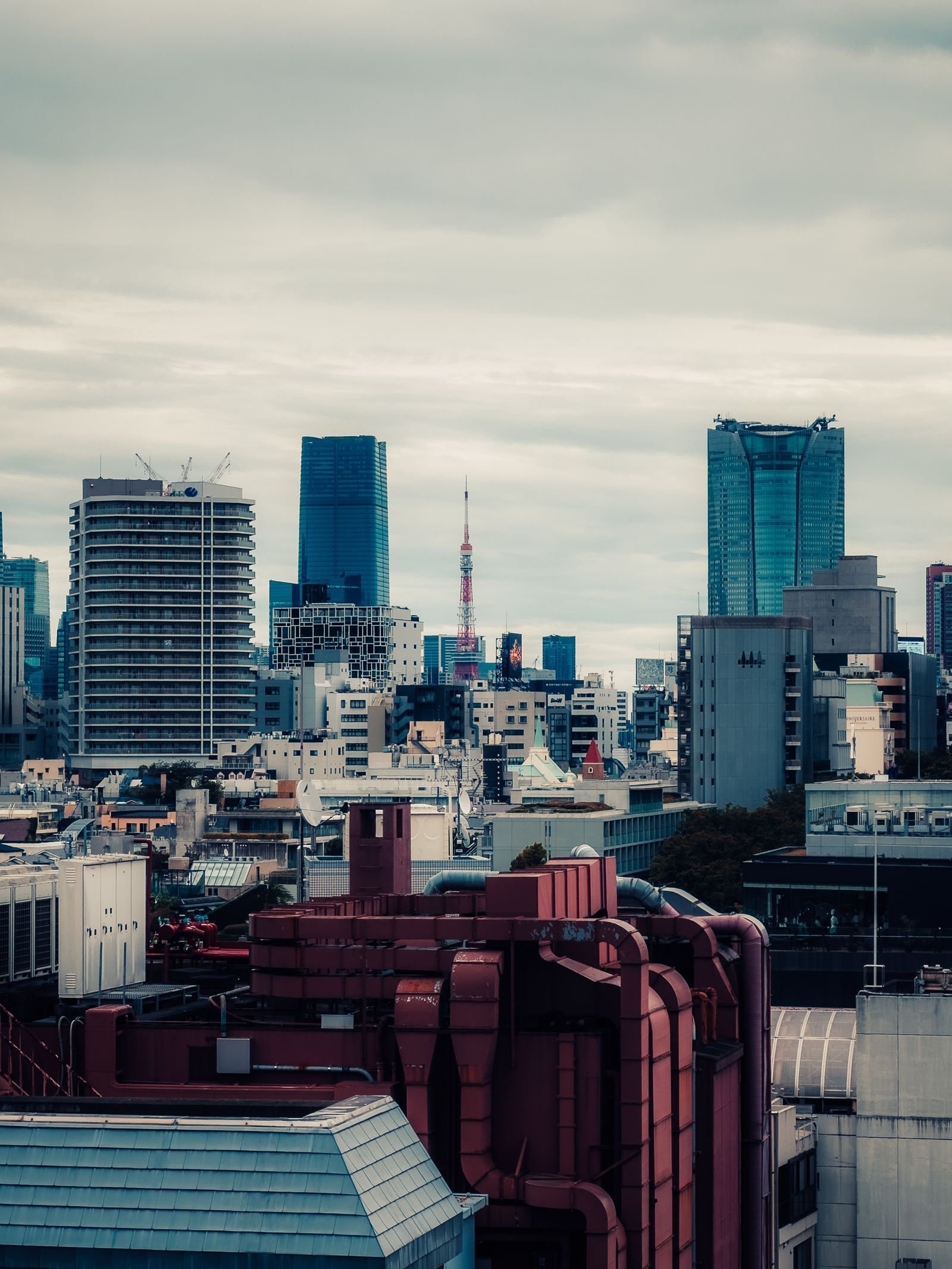
高市政権「支持71.5%」も石油不足 is a headline that captures two very different stories in Japan at the same time: a new government that, according to the reported figure, enjoys support of 71.5%, and an oil shortage that is making fuel, heating and everyday living more expensive and more uncertain. In English, the phrase means, roughly, “Takaichi administration, support at 71.5%, but an oil shortage.” The contrast is the point. High approval does not remove a supply problem, and a supply problem does not automatically cancel high approval. To understand the headline, you need to look at both sides together: why voters are giving the Takaichi administration a strong rating, what “oil shortage” actually means in a country that imports almost all of its oil, and how those two facts interact in households, at petrol stations, in factories and in the national budget.
This guide explains 高市政権「支持71.5%」も石油不足 in plain English, with the context a reader needs to judge the headline for themselves. It covers who Prime Minister Sanae Takaichi is and how she came to lead Japan, what a 71.5% support figure does and does not prove, how Japan buys and uses oil, why prices and availability can feel squeezed even when the country is not literally out of fuel, and what policies, markets and world events to watch next. It is written for readers who do not follow Japanese politics every day, but who want a careful, source-aware explanation rather than a single poll number taken on its own. Where figures differ between polls, this article says so, because support rates in Japan move from survey to survey, and a single number is a snapshot, not a final verdict.
What 高市政権「支持71.5%」も石油不足 Means
高市政権「支持71.5%」も石油不足 breaks into three parts. “高市政権” means the Takaichi administration, the government led by Sanae Takaichi. “支持71.5%” means support of 71.5%, the share of respondents who said they supported the cabinet in the survey behind the headline. “も石油不足” adds the contrast: “but” or “also”, an oil shortage. Put together, the headline is saying that the administration is popular and that Japan is facing an oil shortage at the same time. It does not say that the shortage is caused by the administration, and it does not say that popularity will solve the shortage. It invites the reader to ask a harder question: can a popular government manage an energy problem that is partly outside its control?
That question matters because Japan’s energy position is unusual among large economies. Japan has almost no domestic oil production of its own, so it imports nearly all of the crude oil it uses. Most of that oil comes by sea, much of it from the Middle East, and it passes through shipping routes that can be disrupted by conflict, accidents, weather and market shocks. When world oil prices rise, or when supply is tight, Japan feels the effect quickly at the pump, in kerosene for home heating, in diesel for transport and fishing, and in the cost of making and moving goods. A government can subsidise fuel, release reserves, diversify suppliers and encourage saving, but it cannot create domestic oil where there is almost none. That structural fact is the background to every debate about 高市政権「支持71.5%」も石油不足.
Support, by contrast, is a political fact, not a physical one. A cabinet support rate is the result of asking a sample of people whether they support the current cabinet. In Japan, newspapers, broadcasters and polling organisations run such surveys regularly, often by telephone, and the results vary by pollster, by question wording, by timing and by who answers. A figure of 71.5% is high by the standards of recent Japanese cabinets, where support has often fallen into the 20s, 30s or 40s after a difficult start. It suggests, at the moment of the survey, that many respondents were giving Takaichi the benefit of the doubt, welcomed a change of leadership, or approved of specific early policies. It does not guarantee that support will stay high, and it does not measure whether the government’s energy policy will work. Readers should therefore treat 71.5% as important, but not as the whole story.
For readers who want to keep the two ideas separate while they read, a simple framework helps. First, ask what the support figure measures, who measured it, and when. Second, ask what is actually short: crude oil, refined petrol, diesel, kerosene, or simply affordable fuel at a stable price. Third, ask who is affected most, and how quickly. A shortage that raises petrol prices by a few yen per litre is a different problem from a shortage that leaves a region without heating oil in winter. A government with 71.5% support has political room to act, to spend money on subsidies, and to ask the public to accept difficult choices. Whether it uses that room well is a separate question, and it is the question this article returns to throughout.
Why Support for the Takaichi Administration Reached 71.5%
To understand 高市政権「支持71.5%」も石油不足, start with the politics. Sanae Takaichi became prime minister of Japan in October 2025, after winning the leadership of the Liberal Democratic Party (LDP) and then being chosen by the Diet. She was the country’s first female prime minister, and her arrival followed a period in which the LDP had lost its majority in elections, faced public anger over funding scandals, and struggled to hold together a stable coalition. A new leader, especially one who promises a clear break with the recent past, often receives a “honeymoon” in the polls. Voters who were unhappy with the old government may give the new one a chance before they judge its results. A figure of 71.5% is consistent with that pattern, but it is still high, and it suggests that more than a simple change of face was at work.
Several factors can lift a new cabinet’s support in Japan. First, expectations matter. Takaichi presented herself as a strong, decisive leader on the economy and on national security, and she spoke directly to voters who wanted clearer leadership on prices, wages and defence. Second, the composition of her cabinet and her early policy signals mattered. Appointments, a first speech to the Diet, and the first budget and economic package give voters concrete clues about direction. Third, the opposition matters. If opposition parties are divided, or if voters do not see a credible alternative government, they may support the incumbent even when they are worried about prices. Fourth, external events matter. A government that looks steady during a crisis abroad, or that handles a summit or a trade negotiation well, can gain support that has little to do with day-to-day living costs. All of these can be true at once, and they can all fade at once.
It is also important to be honest about what a poll does not show. A support rate is not an election result. It is not a measure of how many people would vote for the LDP, or for any other party, in a general election. It is not a measure of trust in every minister, or approval of every policy. In Japanese polling, the “support” and “do not support” figures are often reported together, along with the share who say they do not know. A high support figure can sit alongside deep worry about prices, and it can sit alongside a large “do not know” group that could move either way. That is why the second half of 高市政権「支持71.5%」も石油不足 is so important: the same public that supports the government can also be the public that is paying more for petrol, and the two facts will be judged together over time.
- New leadership effect: a first female prime minister and a change from the previous administration gave many voters a reason to look again.
- Clear economic messaging: promises to tackle prices, support wages and protect households were central to the early agenda.
- Security and stability: a firm stance on defence and on Japan’s alliances appealed to voters worried about a more unstable region.
- Weak or divided opposition: without a clear alternative, support for the government can stay high even when worries remain.
- Timing: the survey was taken early, before the hardest trade-offs of governing had to be made in public.
| Factor in 高市政権「支持71.5%」も石油不足 | What it can explain | What it cannot explain |
|---|---|---|
| 71.5% cabinet support | Early goodwill, leadership change, clear messaging | Future election results or policy success |
| Oil shortage and prices | Higher fuel, heating and transport costs | Whether voters blame the government or world markets |
| New prime minister | A fresh start after scandals and election losses | Whether the cabinet can deliver on wages and prices |
| External pressures | Oil markets, wars, shipping and exchange rates | What any single government can control on its own |
Readers who follow Japanese politics will know that support rates for recent prime ministers have often started high and then fallen as governing became harder. That history is not a prediction, but it is a useful warning. A government that starts at 71.5% has political capital, but capital is spent by decisions. Every subsidy, every budget, every price rise and every shortage is a decision point. The test for the Takaichi administration is not whether it can keep 71.5% in the first weeks, but whether it can still command trust after it has had to choose between competing priorities: helping households with fuel costs, keeping public finances sustainable, supporting industry, and maintaining energy security for the longer term.
Japan’s Oil Shortage Explained
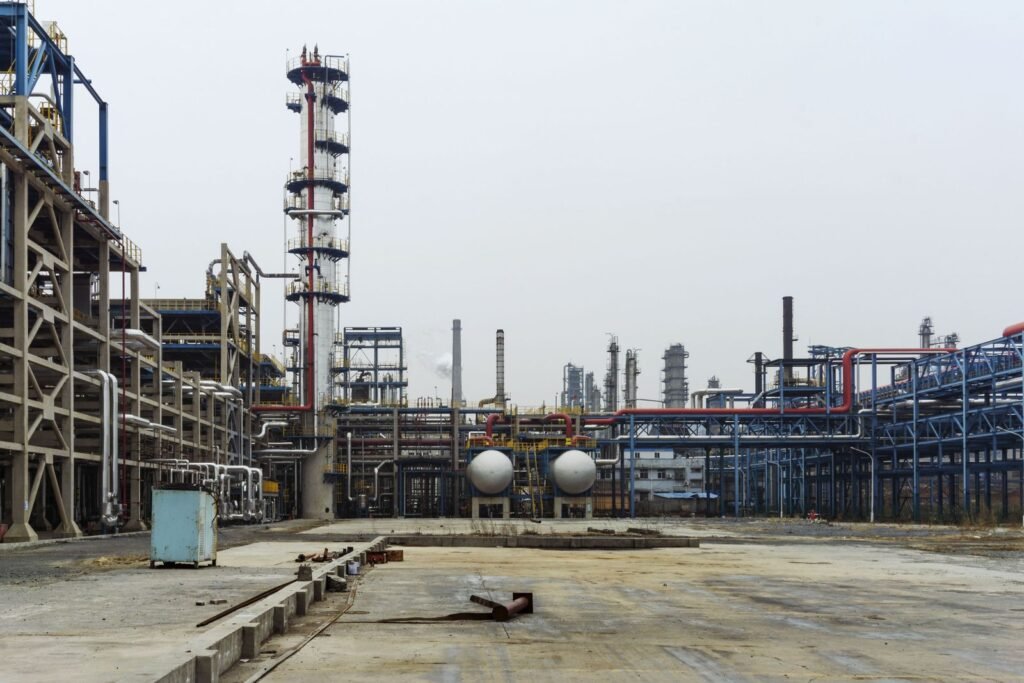
Japan’s oil shortage is best understood as a problem of supply, price and distribution, not as a single empty tank. Japan imports crude oil from a small number of producing regions, refines much of it at home, and then distributes petrol, diesel, kerosene and other products through a network of refineries, terminals and filling stations. At each step, something can go wrong. A cut in production abroad, a delay at sea, a refinery outage, a weak yen that makes dollar-priced oil more expensive in yen, or a surge in demand during a cold winter can all tighten supply. When several of those pressures arrive together, the result is what households experience as a shortage: higher prices, less choice, and worry about whether fuel will be available when it is needed most. That is the reality behind 高市政権「支持71.5%」も石油不足.
The yen matters more than many readers outside Japan realise. Oil is traded internationally in US dollars, so when the yen is weak against the dollar, the same barrel of oil costs more in yen, even if the dollar price has not changed. That cost is passed on, in whole or in part, to drivers and to households that use kerosene for heating. The Japanese government has, at various times, used subsidies to hold down the retail price of petrol, but subsidies cost public money and they do not increase the amount of oil available in the world. They can soften the blow for a time, and they can be politically popular, but they are not a long-term solution to a supply problem. A government with high support, like the one described in 高市政権「支持71.5%」も石油不足, may find it easier to extend a subsidy, but it will still have to explain how it will be paid for.
Japan also holds strategic oil reserves, and it works with the International Energy Agency and with other consuming countries to manage emergencies. Reserves can be released to calm a market, but a release is a temporary measure, not a new source of oil. The longer-term answers are slower and less visible: diversifying where oil comes from, using oil more efficiently, switching some uses to gas, electricity or renewables where that is practical, and keeping enough refining capacity at home to turn crude oil into the products people actually use. None of those answers will show up in a single headline, which is why a careful reader should look beyond the words “oil shortage” and ask which of these pressures is doing the most damage at the moment. For authoritative background on how oil markets and energy security work, see the International Energy Agency and the English pages of Japan’s Ministry of Economy, Trade and Industry.
| Part of Japan’s oil chain | What can tighten supply | How households feel it |
|---|---|---|
| Crude oil imports | Production cuts, conflict, shipping delays | Higher wholesale costs, less certainty |
| Exchange rate | A weak yen against the US dollar | More yen for the same barrel of oil |
| Refining | Outages, maintenance, capacity limits | Less petrol, diesel or kerosene in a region |
| Distribution | Transport, labour and storage limits | Queues, rationing fears, local shortages |
| Retail prices | Subsidies ending, taxes, market prices | More yen per litre at the pump |
It helps to compare Japan with other countries. The United Kingdom, the United States and many European countries also import oil, but they have different domestic production, different pipelines, and different heating systems. Japan is an island country with no oil pipelines from neighbours, so it depends on tankers. It also uses kerosene for heating in many homes, especially in colder regions, which means that a winter shortage is not only a driving problem, it is a heating problem. Children, older people and people with health conditions are more affected by cold homes, which is why fuel prices are also a health and welfare issue. Readers of our earlier guide to the interdependence of the components of wellness will recognise the pattern: physical comfort, financial stress and mental wellbeing are connected, and a fuel problem can quickly become a wider wellbeing problem.
How Households and Businesses Feel 高市政権「支持71.5%」も石油不足
For most people, 高市政権「支持71.5%」も石油不足 is not an abstract debate about energy policy. It is a bill, a tank, a delivery, or a choice. A driver who fills a car every week notices the total at the pump. A family that buys kerosene for a heater notices how many litres a fixed amount of money will buy. A fishing boat owner, a truck driver, a farmer and a small factory owner all notice fuel as a cost that cannot be avoided by working harder. When fuel costs rise, some businesses raise their prices, some absorb the cost and earn less, and some cut hours or services. Those choices then affect customers, workers and local communities in turn. This is why fuel policy is social policy, even when it is discussed as energy policy.
Households can respond in practical ways, but their options are limited, especially in winter. Turning down heating saves money but can harm health, particularly for older people and for children. Driving less saves fuel but can make work, school and medical appointments harder to reach, especially in rural areas where public transport is limited. Buying a more efficient car, insulating a home, or switching to a heat pump can help over years, but those changes cost money up front, and they do not solve a shortage this month. That is why governments are judged on fuel policy in a very direct way: voters do not only ask whether the government understands the problem, they ask whether it has made their next bill easier to pay. A support rate of 71.5% gives the Takaichi administration a chance to be heard on that question, but it does not pay the bill itself.

Businesses face a similar set of choices, with higher stakes. Transport and logistics companies buy fuel in large quantities, and a sustained price rise can change what it costs to move food, medicine and goods to shops. Airlines, shipping companies and manufacturers also use oil, directly or indirectly, and their costs feed into the prices of many other things. Hotels, restaurants and shops that depend on visitors may find that higher transport costs reduce demand. In a country where many small businesses operate on thin margins, a fuel shock can decide whether a business survives the winter. That is one reason why the government’s response to 高市政権「支持71.5%」も石油不足 is watched not only by political commentators, but also by business groups, labour unions and local governments, who want to know whether help will be targeted, timely and simple to claim.
What the Government Can Do About an Oil Shortage
There is no single lever a government can pull to create more oil, but there are several levers it can pull to reduce harm. The first is the price lever: subsidies, tax relief and direct payments can reduce what households and businesses pay, at least for a time. Japan has used petrol subsidies before, and the debate about whether to continue, extend or redesign them is a central part of the response to 高市政権「支持71.5%」も石油不足. The second lever is the supply lever: releasing strategic reserves, asking other producers for more supply, and working with allies to keep shipping routes open. The third lever is the demand lever: encouraging people and businesses to use less fuel, to share transport, and to plan heating carefully, without putting health at risk. The fourth lever is the longer-term lever: investing in energy efficiency, in renewables, in nuclear power where it is judged safe and acceptable, and in the infrastructure that lets Japan use less oil over time.
Each lever has a cost, and each cost creates a political argument. Subsidies are popular, but they are expensive and they can benefit people who do not need help as much as people who do. Reserve releases are useful in an emergency, but reserves are finite. Demand measures can work, but they ask the public to change behaviour, and they can be unpopular if they feel like lectures. Long-term investment is necessary, but it does not help a family this winter. A government with 71.5% support is in a stronger position to explain those trade-offs than a government with 25% support, because more people are willing to listen. But explanation is not the same as agreement, and the moment a policy is announced, the groups who lose out will make their case. That is normal politics, and it is why the headline figure will be tested by the policies that follow it.
For readers who want to follow the response in real time, the most useful sources are primary ones: the prime minister’s office, the Ministry of Economy, Trade and Industry, and reputable international news organisations that report from Tokyo. NHK World provides English-language news from Japan, and Reuters Asia-Pacific coverage reports on markets and politics together. Avoid relying on a single social media post or a single headline, including this one, as the whole story. The best way to judge 高市政権「支持71.5%」も石油不足 over the coming weeks is to check the same three things each time: the latest poll, the latest fuel price, and the latest government announcement, and to ask whether they are moving in the same direction.
Risks, Criticisms and What to Watch Next
No honest account of 高市政権「支持71.5%」も石油不足 should ignore the risks. The first risk is that support falls as fast as it rose. If fuel prices stay high, if a subsidy is withdrawn too soon, or if a winter shortage affects heating, voters who gave the government the benefit of the doubt may change their minds. The second risk is that the government spends a lot on fuel relief and still does not solve the underlying supply problem, leaving public finances weaker and the next shock harder to manage. The third risk is that attention moves to other issues, and energy policy is left to drift until the next crisis. The fourth risk is international: a conflict, a shipping disruption, or a decision by a major producer could tighten the world oil market in a way that no Japanese government could prevent, and the public may still blame the government of the day.
Critics of the administration will also ask different questions from supporters, and both sets of questions deserve to be heard. Supporters may point to the 71.5% figure as proof that the government has a mandate to act boldly on the economy and on security. Critics may point to the same figure and ask what, exactly, the government has delivered so far, and whether high support is based on promises rather than results. Critics may also ask whether the government is paying enough attention to the people who are most affected by fuel costs, including people on low incomes, people in rural areas, and small businesses. A fair reader should listen to both sides, check the evidence, and remember that a poll number is not a policy outcome. The best way to use 高市政権「支持71.5%」も石油不足 as a starting point, rather than as a conclusion, is to keep asking: what has changed for households since the survey, and what will change next?
Frequently Asked Questions About 高市政権「支持71.5%」も石油不足
What does 高市政権「支持71.5%」も石油不足 mean in English?
It means, roughly, “Takaichi administration, support at 71.5%, but an oil shortage.” It describes a government that is popular in the reported poll, at the same time as Japan is facing an oil shortage. The phrase does not, on its own, say why support is high or why oil is short.
Who is Sanae Takaichi?
Sanae Takaichi is the prime minister of Japan, the first woman to hold that office. She became prime minister in October 2025 after winning the leadership of the Liberal Democratic Party. She is known for a strong stance on the economy, on defence and on Japan’s place in the world, and her early government was judged in part on whether it could tackle the rising cost of living.
Is Japan really running out of oil?
Japan is not literally out of oil in the sense of having no fuel at all. “Oil shortage” in this headline is better understood as tight supply and high prices. Japan imports almost all of its oil, so world prices, the exchange rate, shipping and refining all affect what is available and what it costs. In some places and at some times, that tightness can feel like a shortage, especially for heating oil in winter.
Will the 71.5% support rate last?
No one can know that from a single poll. Support rates in Japan often start high for a new prime minister and then fall as governing decisions accumulate. The rate will depend on fuel prices, wages, the economy, and how the government handles the next difficult choices. Check later polls from several pollsters, rather than relying on one figure.
What should households do about high fuel prices?
Households should first check what help is available from the government or from their local authority, and keep heating safe, especially for older people and children. Saving fuel where it is safe to do so, planning journeys, and checking the price at different stations can help in the short term. Longer-term steps, such as insulation and more efficient heating, can help over years, but they cost money up front, so they are not a quick fix for a shortage this month.
Conclusion
高市政権「支持71.5%」も石油不足 is a headline that works because it holds two truths together. A new prime minister can be popular, and a country can still face a difficult energy problem. Support of 71.5% is a real political asset, and it gives the Takaichi administration room to act, to explain trade-offs, and to ask for patience while longer-term policies take effect. An oil shortage is a real physical and economic constraint, and it limits what any government can do in the short term, however popular it is. The story of the next months will be written in the space between those two facts: in fuel prices, in household budgets, in government announcements, and in the next set of polls.
For readers, the most useful habit is a simple one. Do not judge the headline by the poll number alone, and do not judge it by the price at the pump alone. Judge it by both, together, and by the evidence that follows. Keep an eye on the polls, on oil prices and the yen, on what the government actually does about subsidies and supply, and on how households and businesses in different parts of Japan are affected. If support stays high while fuel policy improves, the early goodwill will have been earned. If support falls while fuel costs stay high, the headline will be remembered as a moment of promise, not as a lasting achievement. Either way, 高市政権「支持71.5%」も石油不足 will remain a useful reminder that popularity and policy are different things, and that a government is ultimately judged on what it delivers. To explore more of our guides, visit the Decorator Advice home page, browse the Education category, or contact us with a question or a correction.
[…] standards, rather than a single product review or a social media post. The same care that the first Education article in this series applied to a political headline — checking the source, the timing and the evidence — applies […]
[…] Japan was one of the first countries to give crypto clear rules. It treats crypto as a legal payment method, and exchanges must be licensed with the Financial Services Agency. Japan’s policy shifts still make headlines across Asia, including the political stories covered in our Education section, such as the recent coverage of Japan’s government and energy policy. […]