
%internet of things examples are all around you, even when you do not notice them. The Internet of Things, usually shortened to IoT, is the name for everyday objects that are fitted with sensors, software and a connection to the internet, so that they can collect information, share it, and act on it without a person having to press a button every time. A thermostat that learns when you are home, a watch that counts your steps and checks your heart rate, a fridge that tells you when milk is running low, a street light that brightens when someone walks past, and a tractor that waters only the dry part of a field are all %internet of things examples. They are different objects, in different places, doing different jobs, but they share the same idea: a physical thing that can sense, communicate and respond.
This guide collects the clearest %internet of things examples, grouped by where you will meet them in real life, and explains how each one works, what it is good for, and what to watch out for. It is written for readers who are not engineers, but who want to understand the technology before they buy it, install it at home, use it at work, or teach it to someone else. You do not need to know how to code to follow it. You only need to know the four ideas that sit behind every example: a sensor that notices something, a connection that carries the information, a computer — often in the cloud — that makes sense of it, and an action that follows, such as turning something on, sending an alert, or changing a setting. Keep those four steps in mind, and every example in this guide will make sense.
What Is the Internet of Things?
The Internet of Things is not one device, and it is not one company. It is a way of connecting physical objects to digital systems. The “thing” can be small and cheap, like a temperature sensor in a room, or large and expensive, like a wind turbine or a delivery truck. The “internet” part is the connection: Wi-Fi at home, mobile data on the move, Bluetooth for short distances, or special low-power networks for sensors that need to run for years on a single battery. The “thing” sends data, receives instructions, and often works with other things as part of a system. A single smart bulb is a gadget. A bulb, a motion sensor, a door sensor and a phone app that work together to light a hallway when you come home are an Internet of Things system.
People sometimes ask how IoT is different from the ordinary internet. The ordinary internet connects people to information and to each other, through computers and phones. The Internet of Things connects objects to information and to each other, so that the physical world itself can be measured and controlled. A weather website tells you the temperature outside. An IoT weather station measures the temperature in your garden, sends it to your phone, and tells your sprinkler not to water the lawn because rain is coming. That last step — the action taken without a person in the middle — is what makes IoT different, and what makes it powerful. It is also what makes the choices about privacy, security and reliability matter so much, because a device that can act on its own can also act wrongly if it is badly designed, badly set up, or attacked.
How %internet of things examples Work
Almost all %internet of things examples follow the same four-step pattern, even if the details are very different. First, a sensor measures something in the real world: temperature, light, movement, sound, pressure, location, or the presence of a chemical. Second, the device sends that measurement over a connection to a hub, a phone, or a cloud service. Third, software compares the measurement with a rule or a learned pattern: is the room too warm, is the soil too dry, is the machine vibrating in an unusual way? Fourth, the system takes an action: it turns a heater down, opens a valve, sends you a message, or orders a part before a machine breaks. The best systems are quiet and boring most of the time. They only draw attention to themselves when something needs a human decision.
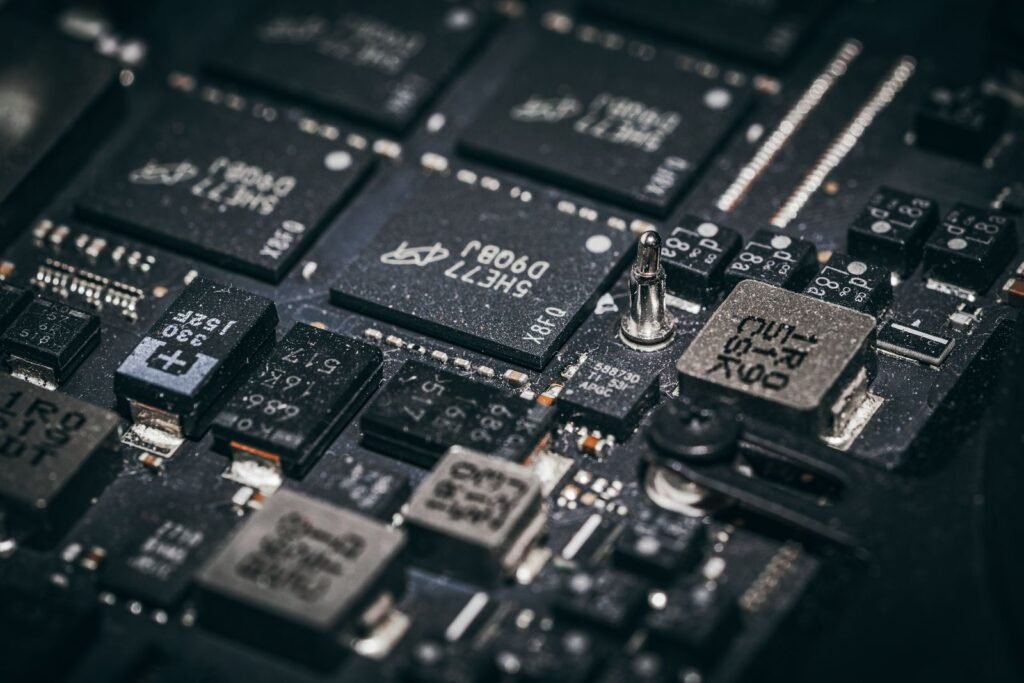
Connectivity is the part that most people find confusing, so it helps to think of it as a choice of trade-offs. Wi-Fi is fast and familiar, which is why it is common at home, but it uses more power and has a limited range. Mobile networks — 4G and 5G — work over long distances and on the move, which is why they are used in cars, delivery vans and remote sensors, but they cost more. Bluetooth and Zigbee are low-power and short-range, which is why they are used for a watch talking to a phone, or a light switch talking to a bulb in the same room. LoRaWAN and similar networks are designed for sensors that send tiny amounts of data, rarely, over kilometres, and run for years on a battery. There is no single “best” connection for IoT. A good %internet of things example uses the connection that fits its job, its location, and how often it needs to report.
%internet of things examples at Home
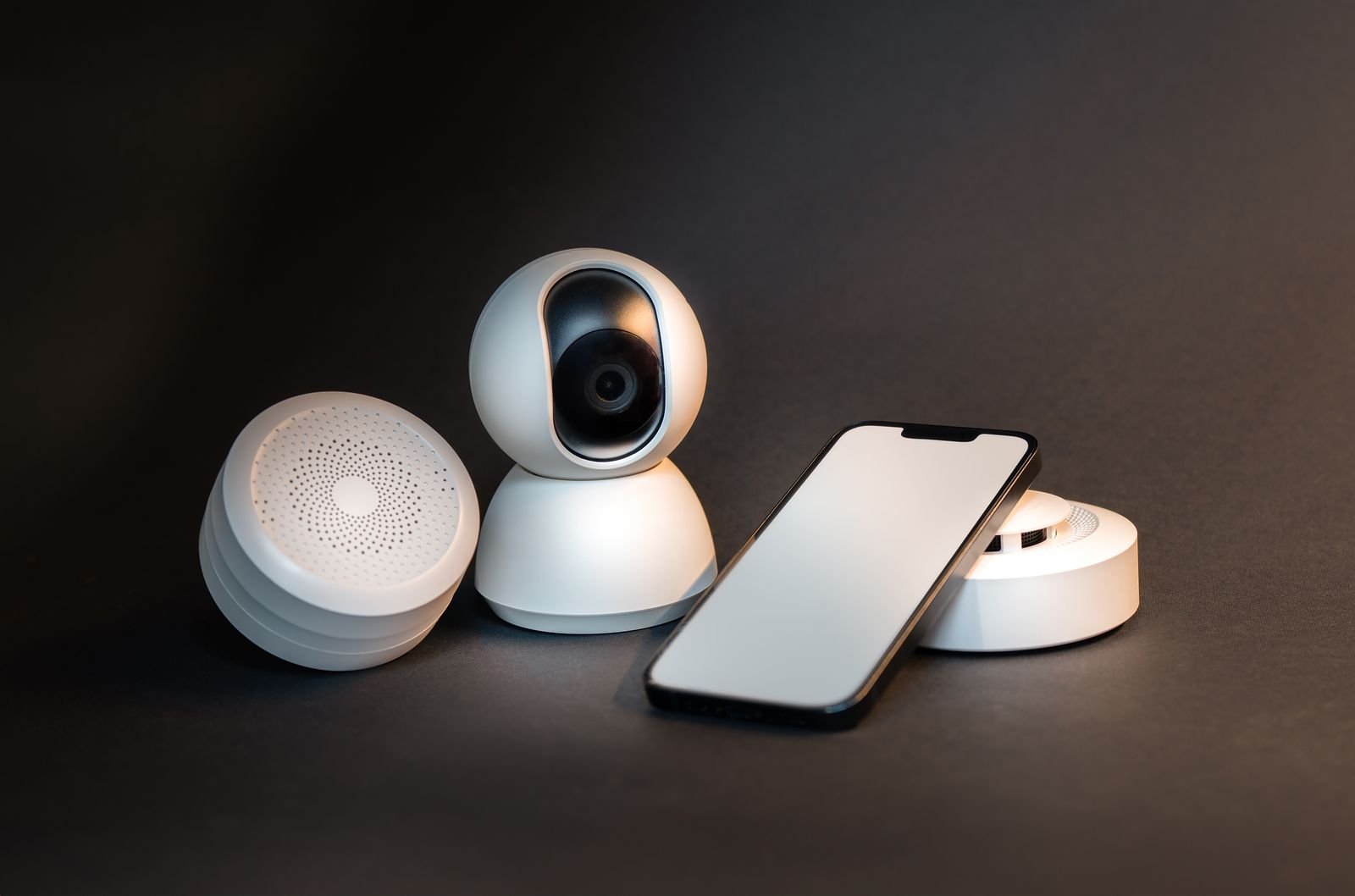
Home is where most people first meet the Internet of Things, and smart home %internet of things examples are the easiest to understand because you can see them working. A smart thermostat is a classic example. It measures the temperature in a room, learns when the house is empty, and turns the heating down when no one is there, then warms the house before you come back. A smart lock is another: it lets you lock and unlock a door with a phone, give a temporary code to a guest or a cleaner, and receive a message when the door is opened. A video doorbell combines a camera, a microphone and a motion sensor, so you can see and speak to a visitor from anywhere, and it can record a short clip when someone approaches the door.
Smart lighting, speakers and appliances
Smart lighting shows how simple an IoT example can be. A smart bulb can be dimmed, turned off, or set to a warm colour in the evening, from a phone or by voice, and it can be linked to a motion sensor so that a hallway lights up only when someone is there. A smart speaker is a hub for many of these devices: you ask it to play music, set a timer, or turn off the lights, and it passes the instruction to the right device. Smart appliances go further. A washing machine can tell you when a cycle is finished, a robot vacuum can map a room and clean it while you are out, and a smart fridge can keep track of what is inside it. None of these is essential on its own, but together they change how a home is run: less time on routine tasks, less energy wasted, and more information about what is happening in the house.
Home safety and energy saving
Safety is often the reason people buy their first IoT device. A smoke alarm that sends an alert to your phone when you are away, a water leak sensor under a sink that warns you before a leak becomes a flood, and a security camera that watches a garden at night are all %internet of things examples that protect a home. Energy saving is the other common reason. A smart plug can measure how much electricity a device uses and switch it off when it is not needed. A smart meter can show, hour by hour, when a home uses the most energy. A solar system with an IoT monitor can show how much power the panels are making, and whether a battery is full. For readers who are planning a home, our Decorator Advice home page has guides on how a home works as a whole, and the ideas in this guide fit into that picture: a comfortable, safe and efficient home is a connected home only if the connections are chosen carefully.
| Smart home example | What it senses | What it does | Main benefit |
|---|---|---|---|
| Smart thermostat | Temperature, occupancy | Heats or cools only when needed | Lower bills, more comfort |
| Smart lock | Door, key code, phone nearby | Locks, unlocks, sends alerts | Keyless entry, guest access |
| Video doorbell | Motion, camera, sound | Shows visitor, records clips | See who is at the door anywhere |
| Leak sensor | Water on a floor | Sends an alert, can shut a valve | Stops a small leak becoming a flood |
| Smart lighting | Motion, time, daylight | Dims or switches lights off | Saves energy, safer halls |
%internet of things examples in Health and Wearables
Wearable devices are among the most personal %internet of things examples. A fitness watch or a smart ring measures steps, heart rate, sleep and sometimes blood oxygen, and it sends that information to a phone app that shows patterns over days and weeks. That information can help a person see whether they are moving enough, sleeping regularly, or recovering well after exercise. It can also be shared, with consent, with a doctor or a coach. In hospitals, IoT goes further: a hospital bed can monitor a patient, a wearable patch can send heart readings to nurses, and a smart pill box can remind a patient to take medicine and tell a carer if a dose is missed. These are powerful examples, because they can help people live more independently for longer, and they can catch a problem early.
Health IoT also shows why accuracy and privacy matter more than novelty. A step count that is a little wrong does not matter much, but a heart reading that is wrong, or a device that sends health data to the wrong place, matters a great deal. Readers should treat health devices as aids, not as diagnoses. If a device suggests a problem, the right next step is to talk to a qualified health professional, not to rely on the device alone. Our guide to the interdependence of the components of wellness explains how sleep, activity, stress and social connection work together, and wearable data is most useful when it is read in that wider context, rather than as a single number on a screen. It is also worth checking who can see the data, how long it is kept, and whether it can be deleted, before buying a health device.
%internet of things examples in Farms, Factories and Cities
Outside the home, %internet of things examples are often larger, quieter and more important to the economy. On a farm, soil sensors measure moisture and nutrients, and they tell an irrigation system to water only the places that need it, at the time of day when water will do the most good. A weather station on a farm, a sensor on a cow that tracks movement and temperature, and a drone that photographs a field from above can together help a farmer use less water, less fertiliser and less medicine, while growing more food. These are not futuristic ideas. They are already used on farms around the world, and they show how IoT can help with a real problem: feeding more people with limited water and land.
In a factory, the same idea is used to keep machines running. A sensor on a motor can measure vibration and temperature, and if the pattern changes in a way that often comes before a breakdown, the system sends a warning so that the machine can be repaired before it stops a whole production line. A warehouse can track where every pallet is, a delivery van can report its location and fuel use, and a shop can count how many items are on a shelf and order more before they run out. In a city, traffic lights can change with the flow of traffic, bins can signal when they are full, street lights can dim when a road is empty, and air quality sensors can tell a council where pollution is worst. Each of these is a %internet of things example, and each one is useful because it replaces a guess with a measurement.

| Where IoT is used | Example | What it measures | Main benefit |
|---|---|---|---|
| Farm | Soil moisture sensor | Water in the soil | Waters only dry areas |
| Factory | Machine vibration sensor | Vibration and heat | Warns before a breakdown |
| City | Smart street light | Motion, daylight, time | Lights a road only when needed |
| Transport | Connected delivery van | Location, fuel, speed | Better routes, less fuel |
| Shop | Smart shelf sensor | Stock on a shelf | Orders before an item runs out |
%internet of things examples in Transport and Energy
Transport is one of the most visible areas for IoT. A modern car already contains dozens of sensors: it can warn a driver about a car in a blind spot, brake if it senses a collision ahead, and send a message if it needs a service. A bus or a train can report its location in real time, so that passengers know when it will arrive, and a delivery company can plan routes that avoid traffic and save fuel. In ports and airports, sensors track containers, luggage and equipment, so that a delay in one place does not become a lost item in another. For energy, a smart grid is an IoT system on a large scale: it measures how much electricity homes and businesses are using, how much solar and wind power is being made, and it balances the two, so that energy is not wasted and the grid stays stable when demand changes quickly.

Energy and transport also show a less obvious point about IoT: the examples that matter most are often invisible. You will not see a sensor in a power cable, a meter in a substation, or a tracker in a shipping container, but those devices are what let a city use less energy, let a shop keep food fresh, and let a hospital keep medicine at the right temperature. The cost of IoT can also be invisible in the same way. A cheap sensor may be easy to buy, but a system with hundreds of sensors needs a plan for who will maintain them, update their software, and replace their batteries. A good IoT project counts that cost from the start, and it chooses fewer, better devices rather than more, cheaper ones that will be forgotten.
Benefits and Risks of %internet of things examples
The benefits of %internet of things examples are easy to list: they save time, they save energy, they give you information you would not otherwise have, and they can act quickly when a person cannot. A leak sensor can save a house from a flood. A machine sensor can save a factory from a shutdown. A wearable can help a person notice a change in their health. A smart grid can save energy across a whole city. Those benefits are real, and they explain why IoT has grown so fast. They also explain why the technology is often sold with a simple promise: buy this device, and your life will be easier.
The risks are also real, and they are often less visible at the point of sale. The first risk is security. Every connected device is a potential way into a home or business network, especially if it still uses a default password, if it never receives software updates, or if it was made by a company that has stopped supporting it. The second risk is privacy. A device that measures your movement, your voice, your location or your health is collecting sensitive information, and that information can be used in ways you did not expect if it is shared, sold, or stolen. The third risk is reliability. A device that depends on the internet will not work well when the internet is down, and a device that depends on a cloud service will stop working if that service is closed. The fourth risk is waste. Cheap, short-lived devices become electronic waste, and a home full of devices that no longer work is a cost, not a benefit.
- Change default passwords: give every device a strong, unique password, and use two-step verification where it is offered.
- Update software: install updates promptly, and replace a device if the maker has stopped providing them.
- Limit what you share: turn off features you do not use, and check which data leaves your home.
- Use a guest network: put IoT devices on a separate Wi-Fi network from your main computers, where your router allows it.
- Keep it simple: start with one or two devices that solve a real problem, rather than buying many at once.
For authoritative guidance on securing connected devices, see the National Institute of Standards and Technology (NIST), which publishes guidance on IoT cybersecurity, and the Institute of Electrical and Electronics Engineers (IEEE), which sets standards for the technologies that IoT devices use. These are the kind of sources to trust on security and standards, rather than a single product review or a social media post. The same care that the first Education article in this series applied to a political headline — checking the source, the timing and the evidence — applies just as well to a technology headline.
Frequently Asked Questions About %internet of things examples
What is the simplest %internet of things example?
A smart light bulb is one of the simplest. It is a normal bulb with a small radio and a processor inside, so it can be switched on and off from a phone, dimmed, or set to a timer. It shows the whole IoT idea in one object: a sensor or a rule, a connection, and an action.
Do I need the internet for IoT devices to work?
Most IoT devices need some kind of network, but not always the public internet. Some work over a local home network, some use Bluetooth to talk to a phone, and some use a hub that connects to the internet on their behalf. A device that can work locally will often keep working when the internet is down, while a device that depends on the cloud may not. Check this before you buy.
Are IoT devices safe and private?
They can be, if they are set up well, but they are not safe by default. Change default passwords, install updates, limit the data you share, and buy from makers who explain how they handle data and how long they will support a device. If a maker does not answer those questions, that is itself an answer.
What is the difference between IoT and a smart home?
A smart home is one use of IoT. IoT is the wider idea: any physical object with a sensor and a connection. Smart homes use IoT at home, but IoT is also used on farms, in factories, in hospitals, in cities and in transport, where the same idea is applied to very different problems.
How many IoT devices are there?
Estimates vary by who is counting and what counts as a device, but the number is in the tens of billions worldwide, and it is still growing. The exact number matters less than the trend: more objects are being connected every year, which makes the choices about security, privacy and waste more important, not less.
Conclusion
%internet of things examples are not a glimpse of the future. They are already in homes, on bodies, in fields, in factories and in cities, quietly measuring, communicating and acting. A thermostat that learns your routine, a watch that tracks your sleep, a sensor that waters only dry soil, a machine that warns you before it breaks, and a street light that brightens as you walk past are all the same idea, applied in different places. The best way to understand IoT is to look for that idea in each example: what is being sensed, how the information travels, what decision is made, and what action follows. When you can answer those four questions, you can judge whether a device is useful, safe and worth its price.
Start small, choose devices that solve a real problem, set them up securely, and keep checking whether they are still earning their place in your home or your work. That is the practical lesson of %internet of things examples, and it is a better guide than any single product launch. To learn more, browse the Education category on Decorator Advice, or contact us with a question.
[…] vulnerability %internet of things examples 高市政権「支持71.5%」も石油不足 Discuss the Interdependence of the Components […]
[…] crypto facto .net vulnerability %internet of things examples 高市政権「支持71.5%」も石油不足 Discuss the Interdependence of the Components […]
[…] Advice homepage, browse our Tech articles, or read our related guides: .NET Vulnerability, Internet of Things Examples, and our latest article Information May Be CUI in Accordance With. You can also compare prices with […]
[…] browse our Blog and our Tech articles, or read our related security guides: .NET Vulnerability and Internet of Things Examples. You can also compare sources with a Google search for information may be CUI in accordance with to […]
[…] articles and our Blog, or read our other research guides such as FintechAsia.net Crypto Facto and Internet of Things Examples. If you searched on Google for the best master programs in Italy, you can compare live results with […]